



Which Series 4 Pergola Fits Your Garden?

- All Series 4 models share 6063-T5 aluminium frame, 2.0-2.5 mm wall thickness, AkzoNobel coating, and 10-year warranty.
- Pergola 4 Pro's motorised louvres (app/voice control) justify the cost only if you adjust the roof daily or plan Glass Walls later.
- Pergola 4 Pro Max's 450 kg/m² snow load and 6 m span with zero posts suit only coastal exposure or large gardens.
- Manual Pergola 4 handles 170 kg/m² (1,500 kg on 3×3 m) - sufficient for sheltered suburban gardens without daily adjustment.
- Pergola 4 Lite is the simplest, most affordable entry point - hand-crank only, no smart features, best for straightforward gardens with a tighter budget.
-
Choose by routine and budget, not specs
- Tight budget/simple garden = Pergola 4 Lite
- Sheltered garden = Pergola 4
- Daily use/future walls = Pro
- Coastal/6 m span = Pro Max.
What do all Series 4 models actually share - and why does that matter first?
Before you compare snow load ratings or decide whether motorised louvres are worth it, settle one question first: do you trust the engineering? With the Series 4 range, the answer is the same across every model. The Series 4 Models are all built from the same 6063-T5 architectural aluminium frame - the same alloy grade, the same 2.0-2.5 mm wall thickness, the same solid aluminium footplates that won't rust and leave orange stains on your patio.
The powder coating is identical across all three. PERGOLUX uses AkzoNobel - the same finish supplier used by Aston Martin and Rolls-Royce - applied at 60-80 micron depth with a 100/100 adhesion score in square-grid testing. Level 4 colour fastness under Xenon-Arc UV testing means the colour holds through years of British summer and coastal salt air without fading. When it's time to clean, a garden hose does it. There's no annual treatment, no oiling, no refinishing cycle.
Every Series 4 model carries the same 10-year structural warranty.
The Pergola 4, Pergola 4 Pro and Pergola 4 Pro Max are also Beaufort Scale 12 certified - rated for 118 km/h (73 mph) winds. That's the relevant number for anyone with a garden on the Cornish coast or exposed to North Sea weather, where wind-driven rain is a more immediate concern than snowfall. The certification applies regardless of which model you choose.
The Pergola 4 Lite shares the same frame material and finish, but is rated for winds up to 100 km/h rather than the Beaufort Scale 12 certification of the rest of the range.
What changes between models is capacity, not quality. Think of this comparison as a sizing exercise - how much engineering does your specific site and garden actually need? Once that framing settles, the decision becomes straightforward. The rest of this guide is just the measurement.

Is the Pergola 4 Lite enough for your garden?
Before weighing up manual against motorised, it's worth asking whether you need the full Pergola 4 at all. The Pergola 4 Lite is the simplest model in the range - a hand-crank roof, no motors, no wiring, nothing to configure. It uses the same 6063-T5 aluminium frame and AkzoNobel coating as the rest of the Series 4 line, just without the higher wind and snow load headroom the Pro models carry.
For a small patio, a first pergola, or a garden where budget matters more than smart-home integration, the Lite covers the essentials: shade, adjustable louvres, and everyday weather protection, without paying for capacity you won't use. It's not the pergola for a coastal plot or a daily-use enclosure - that's what the rest of this guide is for. But if your needs are simple, it's worth ruling in before you start comparing snow load numbers.
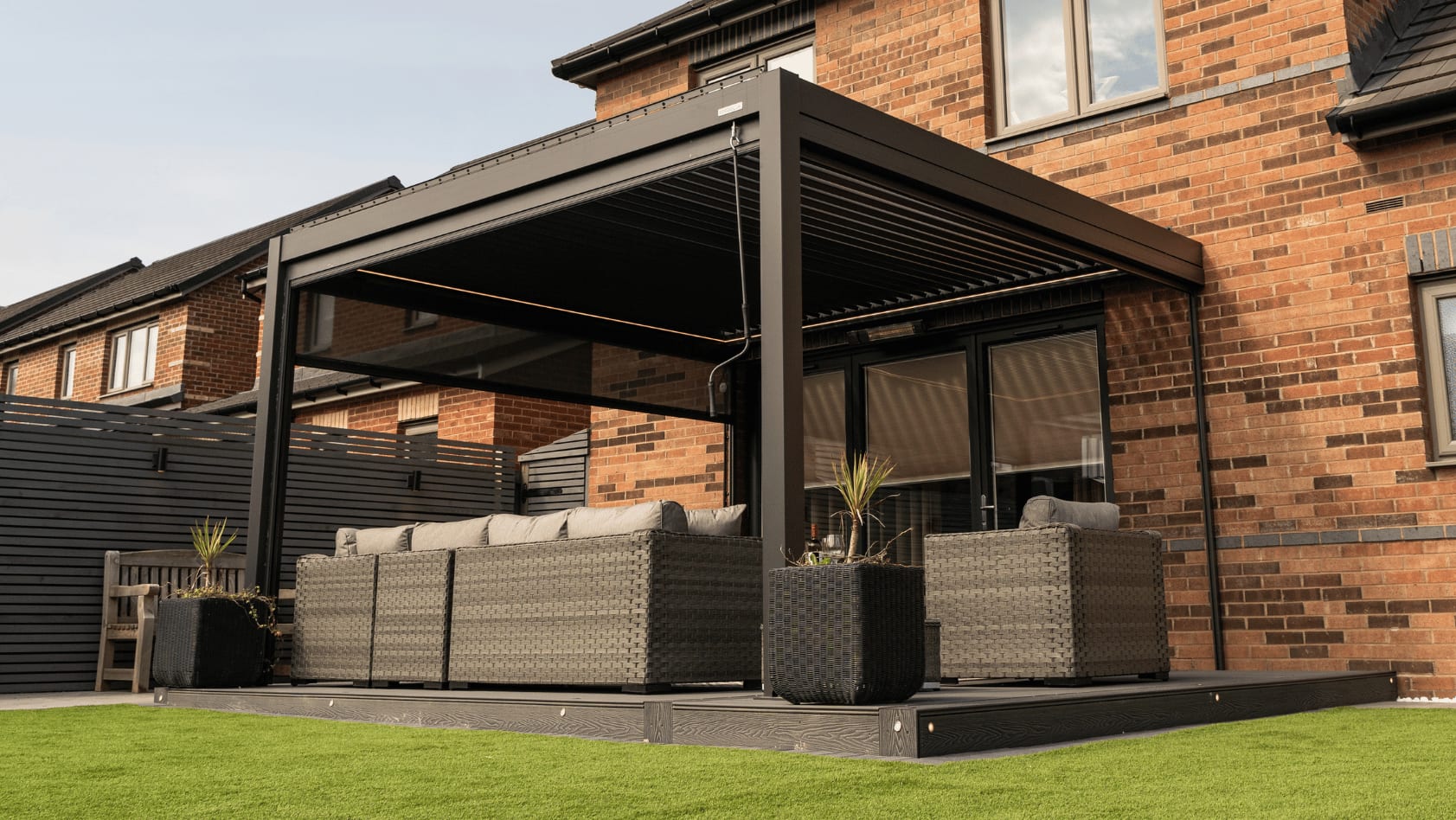
Pergola 4 or Pergola 4 Pro - which side of the manual/motorised line are you on?
For most buyers, this is the real decision. Not Pro vs Pro Max - this one. And the clearest way to frame it is not as a spec comparison but as a question about how you'll actually use the roof.
If your garden is sheltered, your patio runs to roughly 3×4 m, and you'll open the louvres on a Sunday morning and leave them there - a manual crank is no inconvenience at all. The Pergola 4 is the honest answer for that garden. It carries a 170 kg/m² snow load, which on a standard 3×3 m footprint means roughly 1,500 kg of structural capacity - the equivalent of a compact car sitting on the roof. For a protected suburban plot, that's comfortably more than you'll ever ask of it.
The calculation shifts the moment the roof becomes part of your daily routine. Motorised louvres aren't a luxury when you're adjusting them three times a day - morning light, afternoon glare, evening rain. The Pergola 4 Pro handles that through app, remote, or voice command via Matter & Thread native smart-home support: Apple Home, Google Home, Alexa, SmartThings - none of which are available on the Pergola 4. On a wet Tuesday in November, the difference between reaching for your phone and walking outside with a crank is the difference between using the space and deciding not to bother.
On a wet Tuesday in November, the difference between reaching for your phone and walking outside with a crank is the difference between using the space and deciding not to bother.
There's also a structural case for the Pro if you're planning to enclose the space later. Glass Walls and Retractable Screens work with both models, but pairing them with motorised louvres changes how usable the enclosure actually is - you can adjust light and ventilation without stepping outside, which matters far more once the walls are up. The Pro's 320 kg/m² snow load (roughly 2,900 kg on a 3×3 m roof - closer to a large SUV) also gives more headroom if your garden sits more exposed than you initially thought.
The honest tradeoff: the Pergola 4 Pro costs more, and if you have a sheltered, compact garden with no smart-home ambitions, that extra spend doesn't return anything tangible. Don't buy the motor because it sounds better. Buy it because your routine demands it - or because you already know you want Glass Walls down the line.
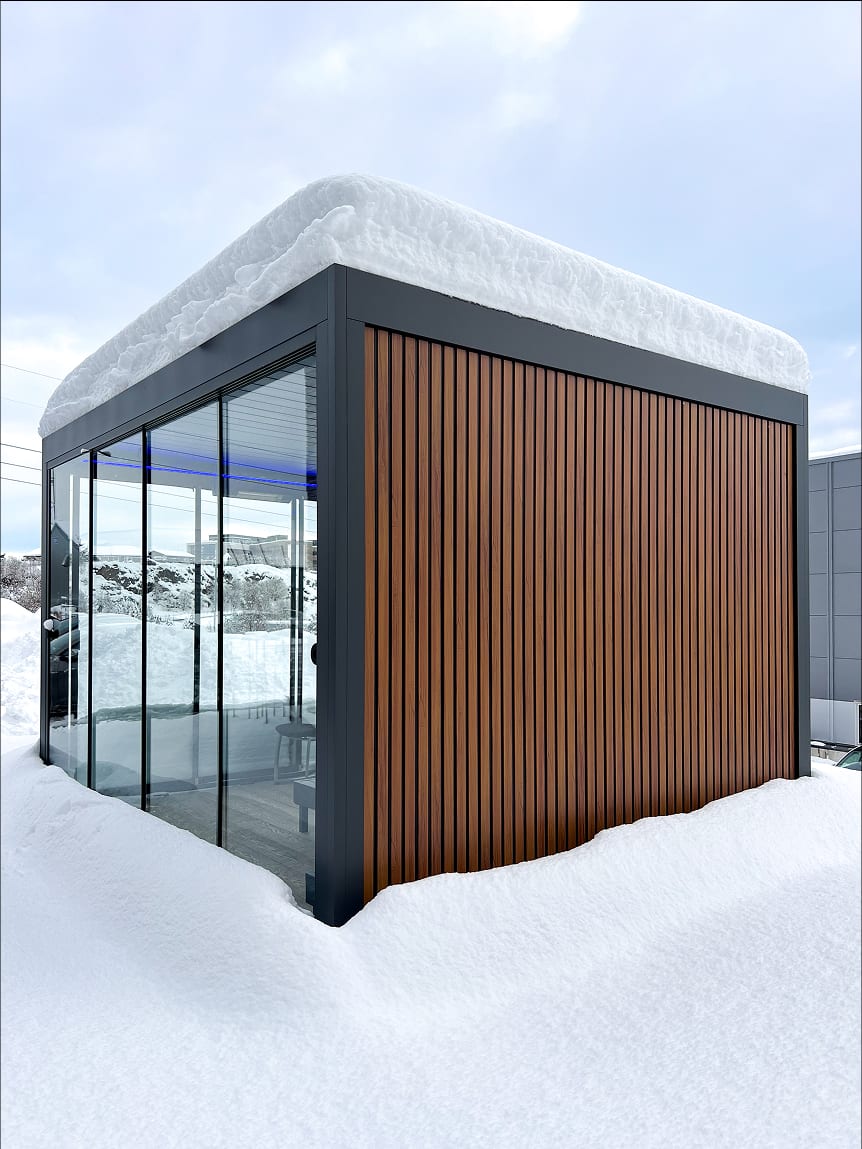
When does the Pergola 4 Pro Max actually justify the step up?
It doesn't, for most UK gardens. That's worth saying clearly before anything else. A sheltered back-to-back in Hackney or a compact suburban terrace in Solihull doesn't need a roof rated for 450 kg/m² - the engineering would be wasted on a site that will never stress it. The Pergola 4 Pro Max earns its price in two specific situations, and if neither applies to your garden, the Pro is the smarter spend.
The first is site exposure. Cornwall, the North Sea coast, elevated gardens in the Cairngorms or the Pennines - these are the installs where the Pro Max's Beaufort Scale 12 wind certification and maximum snow load rating shift from impressive numbers to load-bearing decisions. As covered above, the snow load ladder runs 170 / 320 / 450 kg/m² across the three models. At the Pro Max's rating, a standard 3 × 3 m roof is holding roughly 4,000 kg at peak load. On a coastal site that sees 80 mph gusts and horizontal rain off the Atlantic, that margin isn't overengineering - it's what lets you leave the structure standing through January without anxiety.
The second is span. The Pro Max covers 6 m (20 ft) with zero middle posts. On a larger terrace or an open-plan garden where sightlines matter, that single fact changes the experience entirely. A central post interrupts both the view and the usable layout beneath the roof; removing it means the space reads as one room, not two halves. No other model in the Series 4 range achieves this without a post.
There's a third factor that's easy to overlook: louvre width. The Pro Max ships with 245 mm louvres versus 160 mm across the rest of the range and the wider industry standard. When the louvres are open, the aperture is measurably larger - and in the lower-angle autumn and winter light that Scotland and northern England actually get, that translates to noticeably more natural light under the roof. Not a comfort feature. A functional one, for anyone using the space outside peak summer.
The honest counter is straightforward. If your garden is sheltered, compact, and unlikely to see sustained coastal or highland exposure, you're paying for structural capacity you'll never draw on. The Pro Max costs more and suits a specific profile of site. Match the model to the conditions - not to the spec sheet.
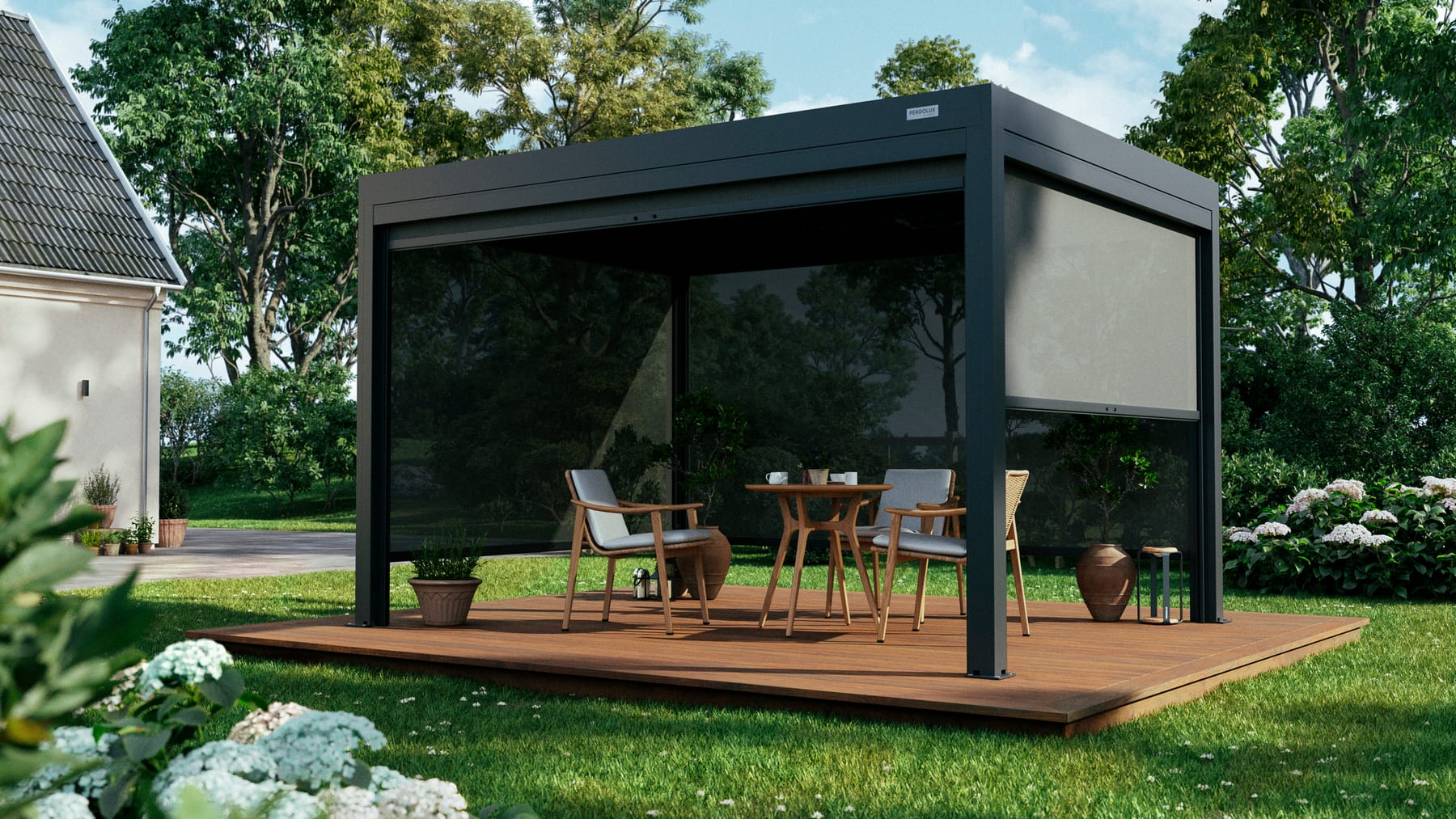
How do planned accessories change which base model makes sense?
Most comparison guides treat the base model as the whole decision. It isn't. The accessories you plan to add will often determine which model you actually need - sometimes more decisively than the snow load ladder or the automation question.
Consider the most common upgrade path: a Pergola 4 Pro paired with Glass Walls and Retractable Screens. Once you enclose the space on three or four sides, the motorised louvres become genuinely essential, not a luxury. Cranking a manual roof from inside a glazed enclosure is awkward at best; in practice, people stop using the manual system and the roof stays fixed. The Pro's motorised control - open, close, tilt - is what makes an enclosed pergola a usable four-season room rather than an expensive greenhouse.
The economics shift too. A Pro with Glass Walls and Retractable Screens can land in a comparable total budget to a bare Pro Max, yet deliver meaningfully more day-to-day usability for a UK climate where wind-driven rain matters far more than a once-a-decade Cairngorms-level snowfall. That's worth modelling against your own priorities before you commit.
Think in terms of total system budget, not just base model price. Within the £5,000-£15,000+ range most Series 4 buyers are working in, the split between base model and accessories is a real trade-off - every pound on the Pro Max spec is a pound not available for enclosures that extend actual usage.
Aluminium Slat Walls work differently. They're not a weather enclosure - they're a privacy and wind-break addition that pairs naturally with either the Pro or the Pro Max without changing the base-model logic. If your primary concern is screening a side boundary or blocking a prevailing westerly, Aluminium Slat Walls solve that problem without forcing you to step up in model tier.
The honest tradeoff cuts both ways. A Pro Max in a small, fully enclosed garden can feel over-specified - the 6 m unobstructed span and the 450 kg/m² rating are engineering capacity that a compact glazed space will never call upon. Conversely, a Pergola 4 bought without accessory planning often feels under-invested by year two, once the owner realises how much more usable an enclosed version would be. Deciding on your accessory intent upfront prevents both mistakes.
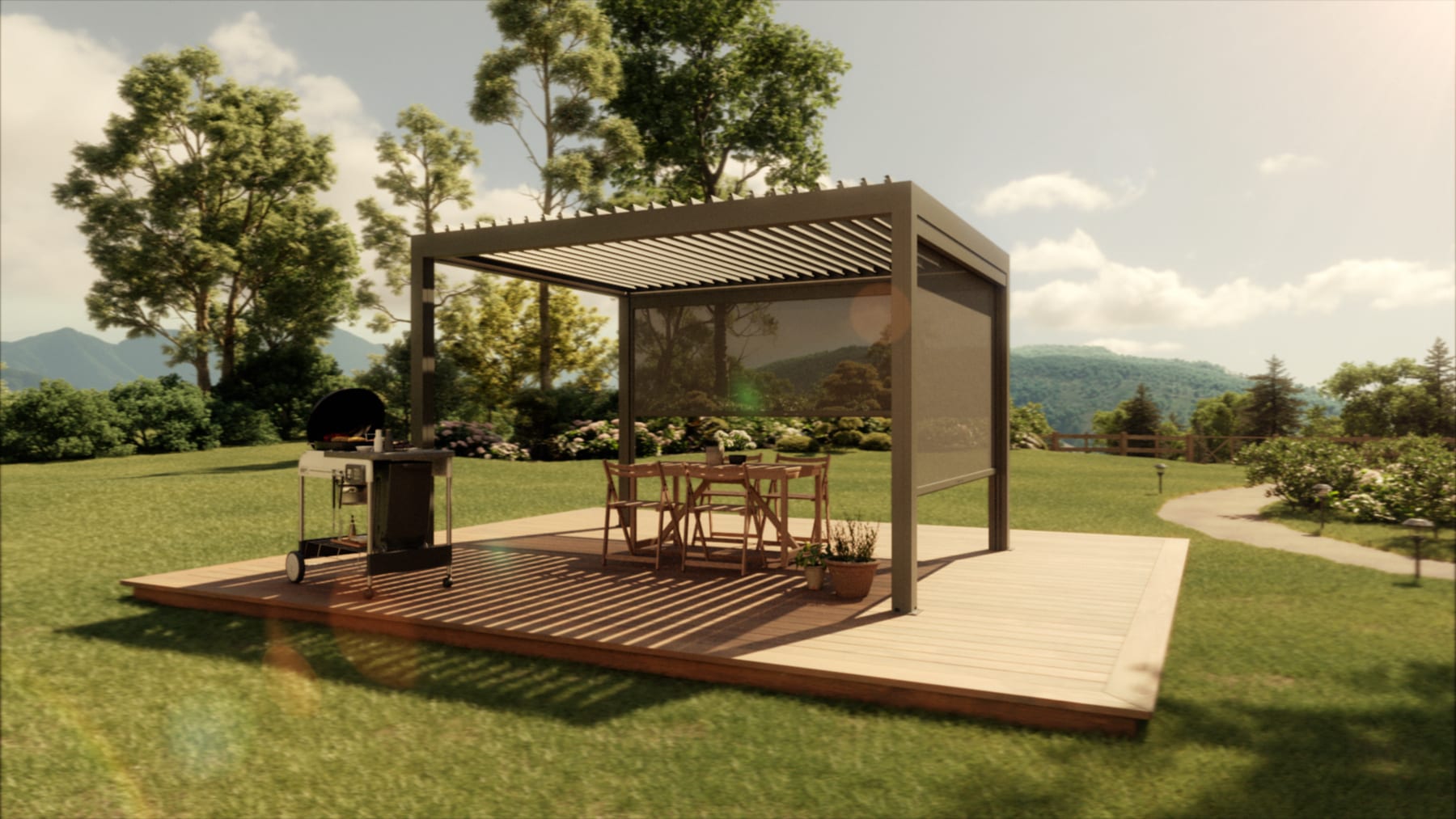
What if the standard footprint doesn't fit your garden?
Not every garden is a clean rectangle. L-shaped terraces, irregular plots, awkward wall-mount positions, or spans that fall outside the standard range - these are common in UK gardens, particularly older properties where boundaries follow history rather than a grid. If you've read this guide and none of the three standard models sits cleanly on your site, that isn't a problem. It's exactly what PERGOLUX Custom Design is built for.
Custom Design is not a premium upsell or a fallback for edge cases. It's the natural endpoint of the decision process for a significant number of buyers. The engineering doesn't change: same 6063-T5 aluminium, same AkzoNobel powder coating, same 10-year structural warranty. What changes is the footprint - sized and configured to your specific space rather than a standard catalogue dimension.
The honest tradeoff is lead time. Standard Series 4 models ship in 1-2 weeks. A custom build takes longer - PERGOLUX will confirm the timeline once your site requirements are scoped, but plan for more than a fortnight. If you're working to a fixed date, factor that in early.
If the footprint is the only thing stopping you from committing to a Series 4 pergola, it shouldn't be.
Back to Blog