



What is a louvred pergola — and will it work in your UK garden?

- Louvred pergolas adjust from full sun to sealed rain cover — gazebos can't manage both simultaneously.
- Beaufort Scale 12 certification (118 km/h) exceeds typical UK coastal storm peaks (80 mph).
- 130° louvre rotation catches low winter sun that 90° systems miss entirely.
- 2.0–2.5 mm aluminium wall thickness prevents the creaking and flex that 1.0–1.5 mm budget units develop by year two.
What is a louvred pergola - and how does it differ from a fixed-roof gazebo or an awning?
A louvred pergola is a freestanding or wall-mounted aluminium frame with a roof made of rotating slats - the louvres. You adjust those slats to move between full open sky, partial shade, and a completely sealed rain cover. That's the whole idea: one structure that actively manages light, ventilation, and weather rather than committing to one fixed position.
A fixed-roof gazebo can't do that. Close it in and you block the sun permanently - useful in July, miserable in March when you want to sit outside and actually feel the light. The sealed roof also traps heat in summer, turning the space underneath into something uncomfortably close to a greenhouse. Open it up and you've lost the weather cover entirely. There's no middle setting.
A louvred pergola is the only common garden structure that manages light, rain, and ventilation simultaneously. Tilt the slats to 45° and you get dappled afternoon light with airflow. Close them fully and the roof seals against wind-driven rain. Open them flat and the garden is back.
Most louvred pergolas come in two control variants. Manual systems use a hand crank - straightforward, no electrical connection needed. Motorised systems like the Pergola 4 Pro open and close with a remote or a phone app, and can be set to respond automatically to rain or wind sensors. Both do the same job; the difference is whether you walk outside to adjust or tap a button from the kitchen.
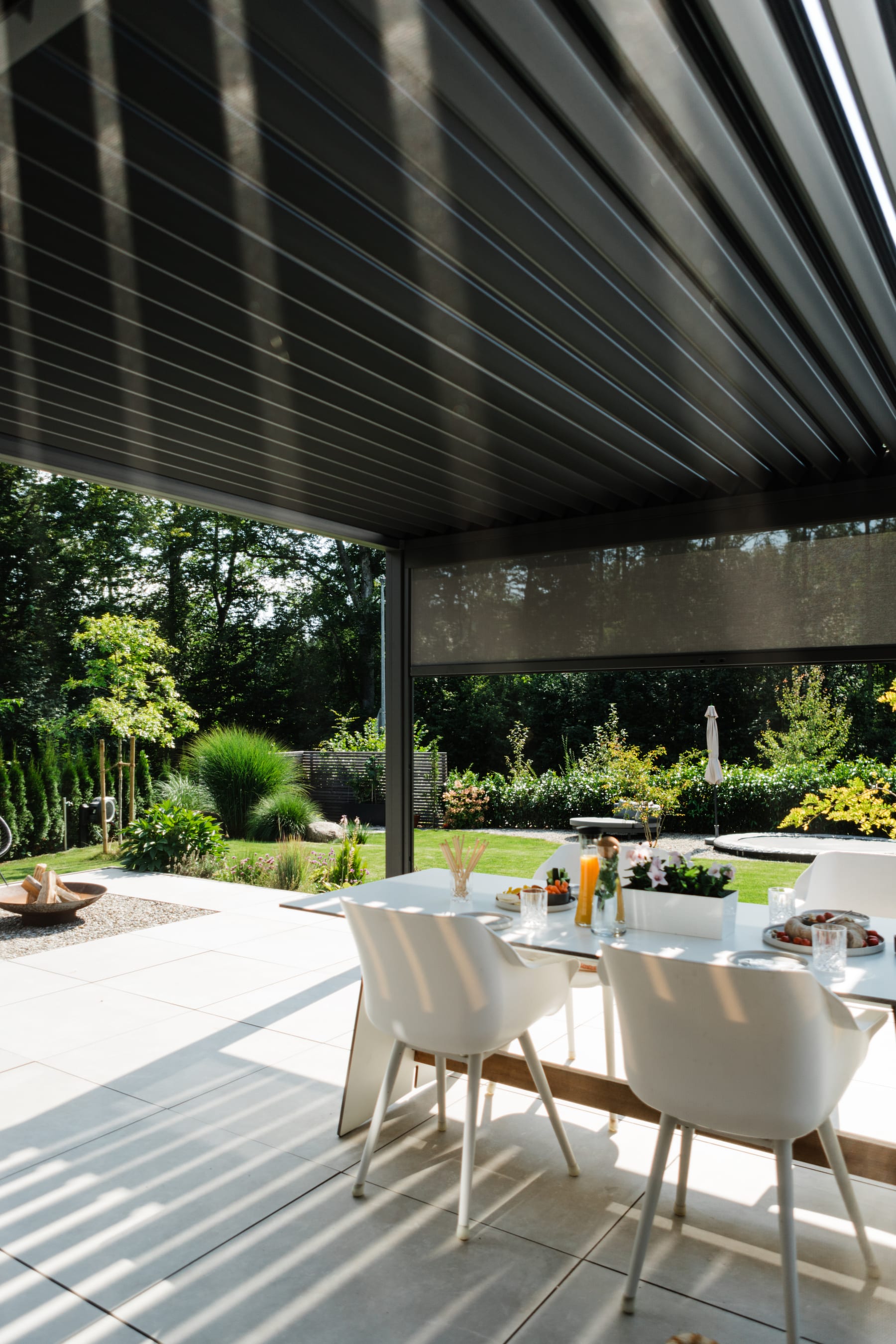
Will a louvred pergola actually hold up in a British garden - wind, rain and all?
The honest answer is yes - but the reason matters more than the claim. British gardens don't punish structures with heavy snow. They punish them with relentless wind-driven rain, salt-laden coastal air, and thirty consecutive grey days in November. Those are the conditions a louvred pergola has to survive, year after year.
The Pergola 4 Pro is certified to Beaufort Scale 12 - 118 km/h (73 mph). To put that in context: severe storms on the Cornish coast and North Sea shoreline typically peak around 80 mph. This structure is rated beyond that. When gusts arrive, the louvres lock closed against the gutter seals and drain internally through the posts - water routes out at the base rather than pooling in the roof. A retractable awning can't do any of this. It has to retract the moment wind picks up, which is exactly when you most want shelter.
Low winter sun is the other British-specific problem. A 130° louvre rotation range - versus the 90° that most competitors offer - means you can catch the shallow October and November sun that a standard system simply misses. At 90°, the slats are nearly horizontal; at 130°, they angle far enough to pull in light that comes in almost flat to the ground. That's the difference between a usable shoulder season and a structure you ignore from September onwards.
Frame quality explains why cheaper units fail faster than the spec sheet suggests. PERGOLUX uses 2.0–2.5 mm aluminium wall thickness throughout. Budget alternatives typically run 1.0–1.5 mm. Thinner walls flex under wind load and expand and contract unevenly through wet winters, which is what causes the creaking and misalignment that owners of cheaper structures report by year two or three.
One tradeoff worth naming plainly: closing the louvres in January keeps the rain out, but it doesn't heat the space. A sealed louvred roof on a cold day is a cold garden room. If you want to use the space in single-figure temperatures, you'll need a PERGOLUX Heater alongside it. That's an additional cost - worth factoring in upfront rather than discovering in February.
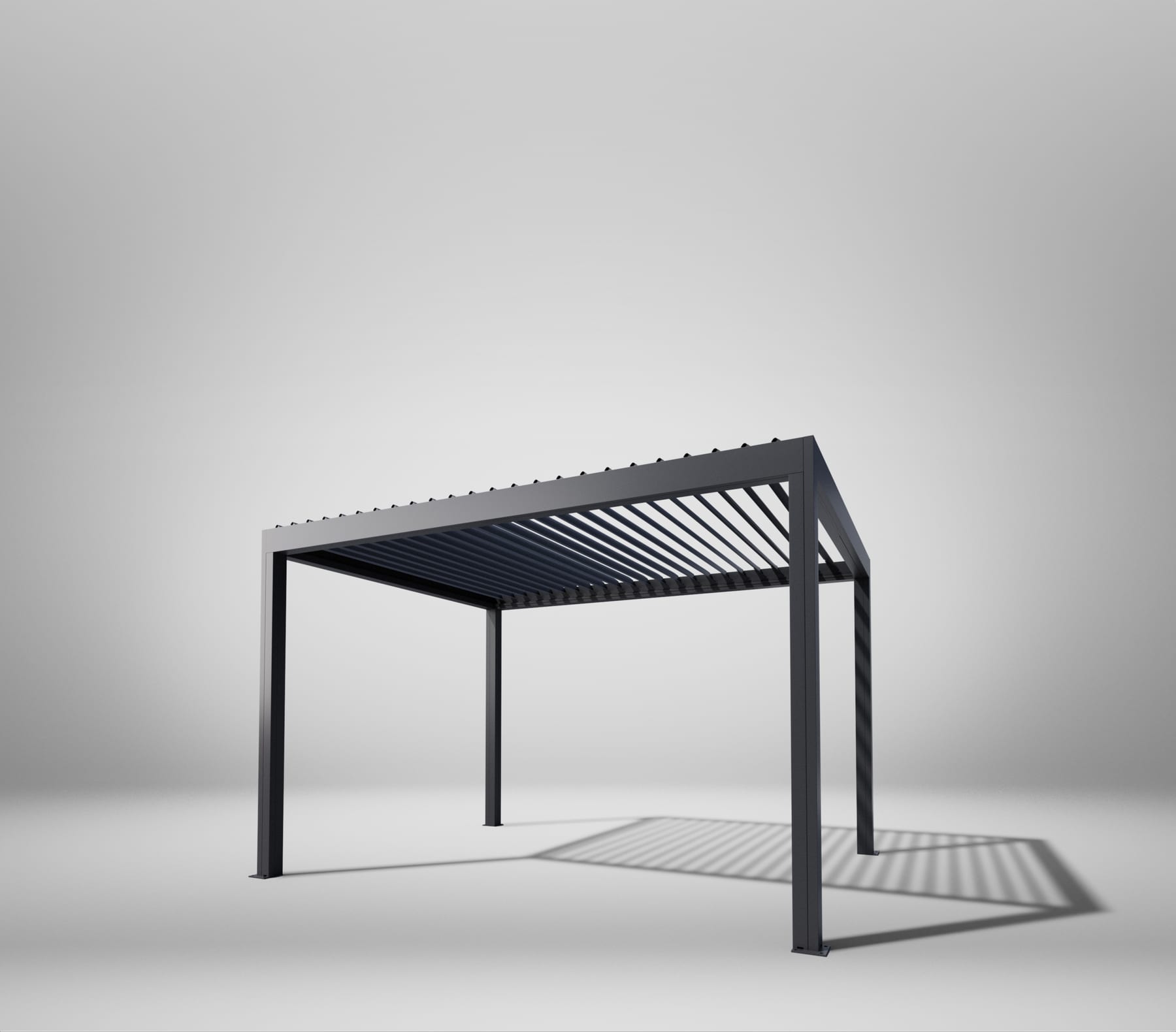
Aluminium, timber, or polycarbonate - which material actually survives a UK garden?
The material your pergola is made from determines whether you're still enjoying it in 2036 or replacing it. Three options dominate the UK market. They perform very differently once British weather gets involved.
| Material | Lifespan (maintained) | Annual upkeep | Key weakness |
|---|---|---|---|
| 6063-T5 Aluminium | 20+ years | Garden-hose rinse | Higher upfront cost |
| Timber | 12–15 years | Annual oiling/treatment | Greys in 3 years; rots without consistent care |
| Polycarbonate | 5–7 years to visible yellowing | Low | Yellows, drums in rain, no structural wind rating |
Aluminium holds its geometry through wet winters because the alloy doesn't absorb moisture, swell, or corrode the way organic materials do. The finish matters as much as the metal - PERGOLUX uses AkzoNobel powder coating with a 100/100 adhesion score and a hardness rating of 90, which is above the industry minimum of 80. Level 4 colour fastness under UV testing means the colour you choose in 2026 still looks the same a decade later, not patchy and faded from British damp. Cleaning is a once-a-year rinse with a garden hose. That's it.
Wall thickness is where budget aluminium units reveal themselves. PERGOLUX frames run 2.0–2.5 mm. The cheaper units you'll find at garden centres typically ship at 1.0–1.5 mm. That's the difference between a structure that stays rigid in a November gale and one that flexes and creaks after two winters.
Timber deserves an honest case. On day one, a well-chosen hardwood pergola looks beautiful - warm, natural, and sympathetic to an older garden or cottage setting that an aluminium frame can feel too modern for. If you're specifically after that aesthetic and you will commit to oiling it annually, timber is a legitimate choice. But most people don't oil it annually. Without consistent treatment, it greys within three years and starts to rot within twelve to fifteen. There's no structural certification equivalent to TUV testing for a timber garden structure, which matters if you're asking it to handle a Cornish storm.
Skip polycarbonate roofing. It's the cheapest entry point, but it yellows within five to seven years and - critically for a British garden - it transmits rain noise directly into the space underneath. A heavy October shower becomes a drumming racket. It's also not rated for sustained wind load, which makes it a genuine safety concern on an exposed plot.
The clearest proof point for aluminium longevity is what manufacturers are prepared to back in writing. PERGOLUX offers a 10-year structural warranty on the Pergola 4 range. No polycarbonate supplier offers that. No timber pergola manufacturer does either - because neither material can sustain the promise.
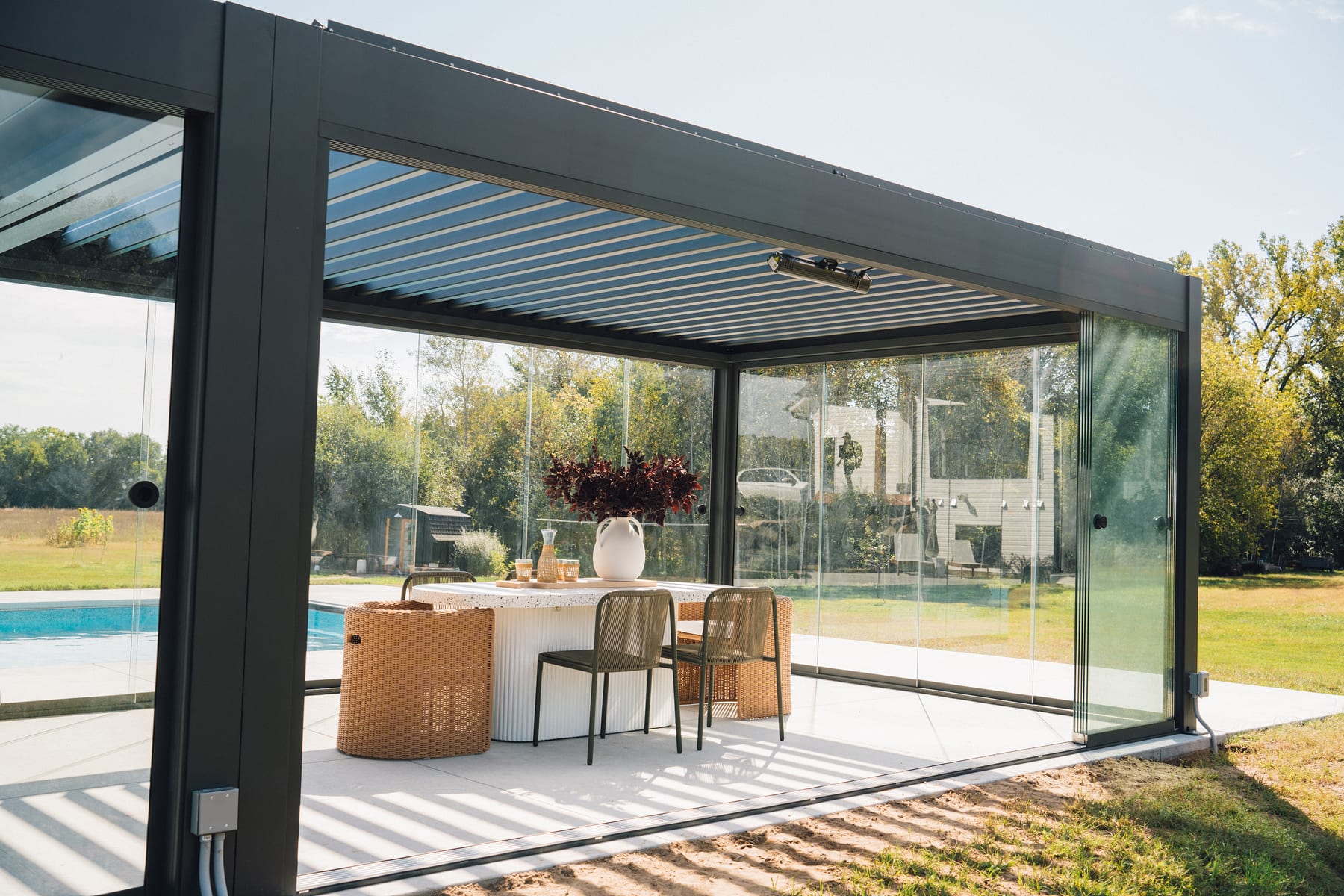
What does a louvred pergola cost in the UK - and how does the maths look over ten years?
Most people look at the sticker price and stop there. That's the wrong number. The right number is cost per year - because a structure you use 365 days a year and never repaint calculates very differently from one you replace in a decade.
Here's how the UK market breaks down. A basic manual louvred pergola runs roughly £3,000–£5,000 installed. A motorised aluminium unit - the Pergola 4 Pro, for example - sits in the £6,000–£10,000 range depending on size and which accessories you add. Add Glass Walls and a heater for a near-conservatory setup and you're looking at £12,000–£15,000+. Those are the honest numbers.
Spread the mid-range motorised unit across ten years and you're paying roughly £700–£1,000 per year - before factoring in near-zero maintenance. An annual rinse with a garden hose is genuinely all the upkeep the 6063-T5 aluminium frame and AkzoNobel powder coating require.
Now compare that against the alternatives. A timber gazebo costs around £2,000 upfront - cheaper, clearly. But add £200 per year for oiling, account for the grey weathering that starts in year three, and factor in replacement around year twelve. By year eight to ten, your total spend on the timber option is approaching what you'd have paid for the aluminium structure that's still going strong at year twenty.
A brick extension makes the comparison even starker. At £150–£300 per square foot, a 3×3 m room costs a minimum of £13,500 - and more likely £20,000+ once groundworks, planning, and finish are included. The Pergola 4 covers the same footprint for a fraction of that, is usable within a weekend of delivery, and doesn't require an architect or a six-month planning process.
On property value: US research (NAR data) puts quality outdoor structures at a 5–15% uplift on home values. The UK market doesn't have equivalent published figures, but estate agents consistently describe well-specified garden rooms and outdoor living structures as a positive differentiator - worth treating as supporting evidence rather than a hard number.
One practical point that rarely makes it into price comparisons: lead time. Most custom-build garden structures take 12–16 weeks from order to install. PERGOLUX ships in 1–2 weeks. If you're planning for spring, that difference matters.
Back to Blog